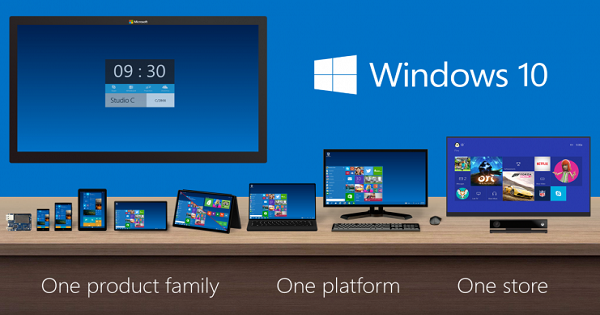
Microsoft Announces Windows 10 BlackBerry Launches Passport in India for Rs. 49,990 The World's Slimmest SmartPhone : Gionee Elife S5.1 iOS 8 Has Finally Arrived Apple Unveils iPhone 6 and iPhone 6 Plus

Google Android One Smartphones Launched in India, Start at Rs 6399


Google Inc launched in India the first smartphones under its Android One project, pricing them at Rs 6,399 ($105) to capture the low-cost segment of the world's fastest growing smartphone market.
The Mountain View-Based company tied up with Indian mobile players Micromax, Karbonn and Spice Mobiles to launch the affordable phones, which are powered by its operating system and aimed at emerging markets.

After launching in India, Google said it plans to expand Android One to Indonesia, Philippines and other South Asian countries by the end of 2014 and in more countries in 2015. Google outlined the pricing and expansion details in a marketing document seen by Reuters. India is seen as a lucrative market for low-cost smartphones because many people are buying the devices for the first time. Just 10 percent of the India's population currently owns a smartphone, brokerage Nomura said in a recent research note, and that figure is likely to double over the next four years.

Google, however, is not the only company jostling for a share of the Indian market. There are at least 80 smartphone brands in India and analysts say the Android One phones must offer customers more than just affordability if it wants to compete with similarly priced devices made by Samsung Electronics Co Ltd, Motorola and China's Xiaomi.

"The initial pricing never sticks but it'll be tough for them to compete if they don't come down further," said Neil Shah, research director for devices and ecosystems at Hong Kong-based technology research agency Counterpoint Research. In June, Google had announced the launch of the Android One project, which aims to boost demand for low-end Android smartphones by vastly improving their quality. Currently, many cheap emerging market smartphones run different and somewhat customised versions of the Android operating system, which along with the many variations in hardware make apps on those phones prone to glitches.
Thursday, 18 September 2014
Posted by Unknown

Apple to Unveil New iPads, OS X Yosemite on October 21


With its iPhone 6 announcement completed, Apple reportedly is preparing a second announcement event that will will launch new iPad models, claims AppleInsider, citing a trusted insider familiar with the company's pre-launch logistics. The report points to the second half of October for the event, but The Daily Dot has gone a step further and predicted an October 21 event based on its own sources.
A person familiar with the company's pre-launch logistics says Apple has set internal project and marketing deadlines of mid-October, ahead of the planned unveiling of major new products during the second half of the month. That would align with an anticipated media event previously rumored to be held at some point during October. The same source who spoke to AppleInsider has shared reliable information on product introduction and timing in the past.
If true, the schedule would align with Apple's pattern for the last several years, which last year saw the company unveil its new iPad Air and iPad mini with Retina display in October with an availability date in early November. This year's event may introduce updated iPad models that include a faster A8 processor, anti-reflective display and a Touch ID fingerprint sensor, although one report suggests most of the upgrades will be limited to the larger iPad Air model. Aside from new iPads, Apple is also expected to use the October event to finalize the details and availability date for OS X Yosemite, which was initially introduced at the company's Worldwide Developers Conference in June. According to The Daily Dot, Yosemite will be released immediately following the October event, similar to the release of OS X Mavericks just after the conclusion of last year's October event.

Other Apple devices in need of upgrades include the Mac mini, MacBook Air, iMac, and the Apple TV, but few details suggest updated these models will be updated before the end of 2014, particularly given Intel's delays with its next-generation Broadwell processors. One recent rumor has, however, claimed Apple may release a new ultra-high definition 27-inch monitor with 5120 x 2880 resolution in 2014, but details on this desktop accessory remain sparse.

Bloomberg is also reporting that Apple plans to introduce new iPads in mid-October.
Apple Inc. will unveil the next generation of iPad tablets around mid-October, a person with knowledge of the plans said, as the company bolsters its product lineup ahead of the holiday shopping season.
The report reiterates earlier claims that new iPad and iPad mini are already in production or soon to be so, while a larger 12.9-inch iPad is scheduled to begin mass production early next year.

Google Maps Now Lets You Add Missing Places


There is nothing quite like being able to rely on the power of collaboration and synergy when trying to achieve an objective, in particular, one that might seem to be impossible for a single person. Having said that, Google Maps have proven itself to be extremely helpful in delivering a comprehensive guide to those who are traveling to unfamiliar places. However, since nothing is perfect in this world, locals know best, which is why Google will now enable users to include missing places and points-of-interest to Maps straight from the mobile app itself.

In order to gain access to this particular feature, all that you need to do is to simply tap anywhere on a map, where the full details of the address will appear. Choose the ‘Add a Missing Place’ link, and you can then fill up the nitty gritty such as Place Name, Category, Phone Number, and Website.

As for the kinds of categories which will be part of the mix, they cover just about everything, ranging from Bars to Shops, Cinemas, Schools, Parks and Hospitals. Prior to hitting ‘Send’, Google will inform you that you will be on the receiving end of updates on the status of these changes to the associated Gmail address, and they can also be published under your account where the Google Map Maker is concerned.

Android Security Flaw Affects Millions of Users


Security experts have discovered a new flaw in Android browser that allows attackers to run scripts that can read the contents of any open tab and harvest private data. The security flaw affects Android devices running any version prior to 4.4.

The flaw was first reported by ethical hacker and blogger Rafay Baloch, who has tested it on a variety of devices, since then his findings have further been confirmed by others in the security industry. According to Google's own analytics, this affects at least 75 percent of all Android users as very large proportion of new phones also ship with Android 4.3 or lower.

According to reports the problem relates the Single-Origin Policy, which can be bypassed for the Android browser by deliberately feeding it a malformed instruction which allows scripts to be run without supervision. This simple exploit allows attackers to read data even from secure sites once they are opened, and redirect the data to any external site.

According to Baloch, "A SOP bypass occurs when a siteA.com is some how able to access the properties of siteB.com such as cookies, location, response etc. Due to the nature of the issue and potential impact, browsers have very strict model pertaining it and a SOP bypass is rarely found in modern browsers, however, they are found once in a while."
Security experts have discovered a new flaw in Android browser that allows attackers to run scripts that can read the contents of any open tab and harvest private data. The security flaw affects Android devices running any version prior to 4.4.
The flaw was first reported by ethical hacker and blogger Rafay Baloch, who has tested it on a variety of devices, since then his findings have further been confirmed by others in the security industry. According to Google's own analytics, this affects at least 75 percent of all Android users as very large proportion of new phones also ship with Android 4.3 or lower.
- See more at: http://www.digit.in/mobile-phones/android-security-flaw-affects-millions-of-users-23921.html#sthash.Nu0pgKIr.dpuf

YouTube to Support Offline Mode in India


YouTube will be going offline in the coming few weeks, allowing users to save videos, said company executive Ceaser Sengupta at the Android One launch event in Gurgaon today.

According to Sengupta, YouTube offline will allow users on data network to watch the same videos over and over again withough having to bother about data charges. “Within the coming few weeks, much of YouTube will be available offline in India. This is huge, and our users will really, really like this. You can download a video once, save it to your phone, and watch it again and again,” said Sengupta.

There was some news in the recent past, about YouTube going the Rdio, Spotify and Beats Music way, offering a music subscription service called YouTube Music Key priced at $9.99/month. Sengupta didn’t mention about the offline YouTube being a subscription model, but the offline service will not be restricted to music videos only.  No details were given out on the advertising model for offline videos.

Metis, Intel Launch Eddy Educational Tablet at Rs. 9,999


City-based start up Metis Learning has partnered with chip maker Intel to launch an educational tablet 'Eddy', aimed at children aged from 2-10 years.

The tablet, priced at Rs 9,999 will be available exclusively on eCommerce firm Amazon's India website for about a month, after which it will be available across leading electronics and toy stores.
"We had earlier launched a beta version and it got a tremendous response. We have made improvements and partnered Intel to power the device. We are confident of doing well across cities as parents are looking for solutions to help their kids learn in a fun way," Metis Learning Solution co-founder Bharat Gulia told PTI.

The device is priced at Rs 9,999 and will come with discounts and offers worth Rs 4,500 for a limited time as an inaugural offer. We conducted studies and found children in India are now increasingly spending a lot of time playing games on parent’s smartphones, who are often concerned about the content. Eddy provides a responsible and safe technology alternative for introducing kids to the digital age. Parents can easily control the content and the time the child has access to the device. Besides, Eddy’s screen ensures UV ray protection and lower eyestrain compared to other screens. It also comes with high quality drop-safe bumper made of food grade silicone bumper to prevent damage from falls," Gulia said.

Powered by Intel's Atom processor, the tablet comes pre-loaded with over 160 learning apps selected by Metis' educators and content experts to accelerate a child's social, emotional and cognitive development, he added.  The tablet features a seven-inch screen, 16GB memory (expandable upto 32GB), 1GB RAM, 2MP front and rear cameras, 2800 mAH battery and 3G connectivity via dongles.


Gulia said the company has received queries from other countries like Portugal for the product, but it is yet to take a decision on exporting the tablet. "Educational tablets may be a niche category but it is definitely growing. In markets like the US, the numbers are bigger but in India too, it is estimated to be about 10 per cent of the tablets

Google Acquires Polar to Improve Google+ on Mobile


Google is bringing Polar over to Google+ in the hopes that the team behind the popular opinion-tracking service will be able to heat up Google's social network.  While it remains to be seen just how Google's latest acquisition might best fit into the Google+ experience, Google's David Besbris, vice president of engineering, told the Wall Street Journal that Polar's team will work to make Google+ more user-friendly on mobile devices.

Polar's current line of business, which it will be shutting down at the end of the year, is just what its name suggests: easy-to-use polls that can be filled out via various Web services and apps. We're not talking about surveys filled with hundreds of options. Rather, Polar's offerings are more of the "Do you like Mario or Luigi?" variety.

"Polar started with the simple idea that everyone has an opinion worth hearing. Since then one in every 449 Internet users told us what their opinion was by voting on a Polar poll. Our deepest thanks go out to each and every one of you," reads Polar's description. Polar was founded approximately two years ago by Luke Wroblewski and Jeff Cole—the former previously the co-founder and chief product officer of Bagcheck, and the latter the co-founder of Patients Like Me.

As part of the company cozying up with Google, Polar is releasing a series of articles Wroblewski wrote about mobile and multi-device design as a free iBook and PDF document. It's also a bit of a tease of Wroblewski's expertise in the area; he previously wrote a book about app design called "Mobile First," which has since become a bit of a Silicon Valley buzzword.
"Each version is filled with nuanced user interface design details and big-picture thinking on mobile and multi-device design for PCs, tablets, TVs, and beyond. It's our hope that some of our experiences, insights, and missteps, will ultimately help you with the product journey you're on now or will be in the future," Wroblewski wrote.

BSNL Teams Up with Micromax to Drive Data Usage


Micromax on Tuesday said it has partnered state-run telecom firm BSNL to offer free Internet access on select devices in a bid to drive data usage in the country. Under the partnership, BSNL will bundle free data usage of up to 2GB per quarter for 12 months on smartphones, free voice calls (on net) on feature phones and other freebies on purchase of Micromax tablet and data cards.

The offer will be available on six Micromax devices — X070, X088 (feature phones), P410i (tablet), MMX377G (datacard), A37 and A37B (smartphones).

“We are delighted to partner with BSNL, as this collaboration will be an excellent unification of BSNL’s offerings and Micromax’s design capability thus enabling millions of Indian consumers to enjoy seamless connectivity through data usage, affordable call rates and other VAS services,” Micromax CEO Vineet Taneja said.

The partnership will further provide a major boost to better connectivity and Internet adoption as BSNL’s pan-India network coupled with our devices, backed by a strong channel and retail presence which will take these offerings across length and breadth of the country, he added.

“The association will create immense opportunities for customers by offering them high speed 3G data. BSNL has already provided 3G coverage in more than 2,300 cities and towns of India and is committed to provide 3G coverage to additional towns,” BSNL CMD A N Rai said.

Government May Ban Gmail and Yahoo Email Services For Official Use


Popular email services like Gmail and Yahoo! are likely to be banned for official use to safeguard critical and sensitive government data. A proposal to this effect is being moved by Department of Electronics and Information Technology (DeitY) for Cabinet approval by month-end, sources said.
Government communication, barring those of Ministry of Defence and External Affairs, will be done using the platform of the National Informatics Centre (NIC), they added.

While Defence Ministry has its own separate secure email server, the External Affairs too may follow suit. The move comes amid concerns about rising cybercrime and hacking incidents. Earlier this week, five million usernames and passwords of Google were reported to have been leaked online by Russian hackers. Government is expected to route official communication through the National Informatics Centre's (NIC) email service.

DeitY has drafted the policy on use of email for government offices and departments and views and comments of ministries concerned are being taken on this, sources said.

Sources said the policy seeks to protect large amount of critical government data and aims to make it mandatory for government offices to communicate only on nic.in platform, not on commercial email services Gmail, Yahoo!, Hotmail, etc. The policy is expected to cover about 5-6 lakh Central and state government employees for using the email service provided by NIC, they added. To ensure smooth working of the NIC platform, DeitY will soon require about Rs 4-5 crore to ramp up NIC infrastructure.

Besides, a total investment of around Rs 50-100 crore would be required for full operationability of the policy, including integrating emails with cloud so that official data can be saved on a cloud platform and can then be easily shared with the concerned government ministries and departments.
Governments globally have also been trying to secure their official communication post fallout of the Snowden saga, which contended the US intelligence agencies used a secret data- mining programme to monitor worldwide Internet data to spy on various countries, including India.

The 24 Tech Companies Which Are Changing Your Future


Every year, the World Economic Forum recognises a group of companies whose innovations have the power to change industries and societies. Here is a full list of the Technology Pioneers of 2015.
Life Sciences & Health
  1. Guardant Health – Guardant Health is a diagnostics company focused on changing the way cancer is managed. The company’s proprietary technology enables comprehensive real-time monitoring of cancer through a simple blood test. Current treatment often requires biopsies, which are risky and costly and consequently cannot be used to capture genetic changes that typically lead to treatment failure. Guardant Health’s technology enables physicians to see these genetic changes in real time and treat them with the appropriate therapies.
  2. Health Catalyst – Health Catalyst’s data warehousing and clinical analytics products help health systems use their information to improve the quality and efficiency of care and reduce costs. The company’s data warehousing architecture uses a just-in-time approach to data binding to resolve many of the problems encountered in traditional solutions. The Health Catalyst data warehouse combines that architecture with a set of analytics applications to generate new insights that multidisciplinary teams can use to make and maintain process changes.
  3. Labcyte – Liquid handling is a critical area in life science discovery, research and development. Labcyte’s systems use sound energy to transfer liquids with extreme precision and accuracy in billionth-of-a-litre increments, eliminating the significant issues of traditional methods using pipette tips. This makes it easier for Labcyte’s customers to discover new therapeutics, improve diagnostics and target prescriptions of medicines for patient-specific treatments.
  4. Organovo – Organovo’s 3D bioprinting technology is changing medical research and practice by creating novel therapeutic tissues and providing better drug development models. Many diseases lack effective treatments, and over 70% of drugs fail late in clinical trials due to toxicity or efficacy. Organovo’s 3D bioprinter provides a way to design and create functional human tissues that more accurately reproduce native biology to create novel therapies and enable safer, more effective drugs.
  5. Vaxxas – Vaxxas’s vaccine delivery system enhances the performance of existing and next-generation vaccines. It has a number of advantages over needle injections: application to the skin is pain-free and has been shown in preclinical studies to result in a protective immunogenic response, using as little as one-hundredth of the dose required by conventional needle and syringe.
Energy & Clean Tech
  1. AutoGrid Systems  AutoGrid Systems transforms data into the cleanest, cheapest source of power. The company’s Energy Data Platform (EDP) gives utilities, businesses, communities and individuals the ability to fine-tune power consumption and costs with big data and cloud-based software. By optimizing how the world uses power, AutoGrid reduces emissions, makes it possible to integrate greater amounts of solar and wind power onto the grid, lowers the risk of outages and brings the benefits of electricity to more people.
  2. Cambrian Innovation Cambrian Innovation uses bioelectric technology to cost-effectively clean wastewater and generate significant clean energy. The company’s flagship product is deployed at industrial facilities to reduce biological oxygen demand while generating the facilities’ electricity needs. Treated water can later be reused on site, reducing freshwater requirements and enabling water-intensive businesses to grow.
  3. Genomatica – Genomatica develops manufacturing processes that enable firms to produce the world’s most widely used chemicals in a “better” way with better economics and greater sustainability than petroleum-based processes. The company’s processes are designed to convert a range of alternative feedstocks into numerous target chemicals that meet industry specifications for large and established markets. Chemicals produced using Genomatica’s manufacturing processes can be used the exact same way to make downstream materials and products such as petro-chemicals, simplifying and accelerating adoption.
  4. Mera Gao Micro Grid Power – Mera Gao Micro Grid Power operates low-cost micro grids that provide energy to India’s off-grid poor. The company’s village-level lighting facilities generate electricity through centrally located solar panels, store the generated electricity in batteries and distribute it across the village to power LED lights and mobile phone chargers in customer households. Mera Gao’s facilities offer its customers lower-cost and higher-quality lighting than kerosene, the primary source of night-time lighting for India’s off-grid households.
  5. Proterra – Proterra designs and manufactures heavy-duty drive and energy storage systems, vehicle control systems and complete transit buses. The company’s zero-emission transit vehicles enable bus fleet operators to reduce operating costs while delivering clean, quiet power to the community. The product combines the benefits of sustainability with the lowest total cost of ownership.
Digital Networks & Computing
  1. Canonical Group – Canonical is the company behind the Ubuntu operating system and the leading provider of services for Ubuntu deployments in the enterprise, original equipment manufacturer and telecommunications sectors. Launched in 2004, Ubuntu is an open-source platform for client, server and cloud computing, including mobile devices and smartphones. Users range from Fortune 500 companies to hardware makers, content providers, software developers and individuals.
  2. Couchbase – The Couchbase open-source project is a community of developers and users of Couchbase document-oriented database technology. The company provides a complete, scalable and performing general-purpose NoSQL database including a shared nothing architecture, a single node-type, a built-in caching layer, true auto-sharding and the world’s first NoSQL mobile offering.
  3. Ionic Security – Ionic Security brings trust to distributed computing by providing individuals and organizations with native control over the circulation of their personal data in contextually relevant ways. With an approach that is agnostic to the device, network connection or application, Ionic Security aims to solve the data security problems at the intersection of cloud, mobility and analytics. In the cloud, in an organization’s data centre or on mobile devices, Ionic provides a common and independent control plane of data in the wild.
  4. LearnUp – LearnUp is addressing the skills gap by empowering entry-level jobseekers to learn the skills needed to get hired. The company develops online training in partnership with employers that enables jobseekers to practice real-life situations of a particular job. By completing the training before they interview, jobseekers are prepared for the job and increase their chances of getting hired. LearnUp is building the education-to-employment pathway for those looking for work, while helping employers hire qualified talent.
  5. Raspberry Pi Foundation – The Raspberry Pi Foundation is a UK-based not-for-profit, whose flagship product is a low-cost, Linux-based microcomputer intended for use in education. Using mobile-phone technology to build a general-purpose computer makes hardware more affordable for educational, embedded and developing world markets. The Foundation is part of a broad coalition of organizations working to increase participation in computing education around the world.
Materials Transformation
  1. Newlight Technologies – Newlight Technologies has developed a carbon-capture and plastics manufacturing technology, converting air and greenhouse gas into plastics that can out-compete oil-based plastics on price and performance. The company’s product is being used to replace oil-based plastics at commercial scale in a wide range of market segments. Newlight’s technology shows how market-driven solutions can help to counter climate change.
  2. Silicor Materials – Silicor Materials has developed a new, more environmentally friendly method of manufacturing solar silicon for photovoltaic cell and module producers. It costs roughly half of what traditional electronic-grade silicon costs to produce, requires up to two-thirds less energy than competing methods, uses no hazardous chemicals and achieves comparable efficiencies.
Cybernetics
  1. Avegant Corporation – Avegant produces the Avegant Glyph, a smart headphone integrating premium audio with virtual retinal display (VRD) technologies and physiological sensors. VRD mimics the way humans naturally see light, and projecting images directly onto the user’s retina makes them more lifelike and vivid. Future possible applications include accessibility features for the functionally blind.
  2. HiBot Corporation – HiBot develops robotics that enable dangerous jobs to be performed in a safer and more reliable way, with a level of automation that allows robots to work remotely in complex environments while keeping the human operator in the loop. An example is the use of snake robot technology in applications ranging from inspection of pipes to intervention in nuclear power plants.
Connectivity & Smart Infrastructure
  1. BlaBlaCar – BlaBlaCar connects people who need to travel long distances to drivers who have empty seats, so they can share the costs of a journey and make travel more social. The website and free mobile app allow drivers to publish a planned journey, and passengers to search and book a ride. The company provides a range of features to create a secure, trust-based community. Over a million people a month use BlaBlaCar to share long journeys.
  2. Eta Devices – Eta Devices’ technology allows the mobile communications industry to reduce its power consumption. In base stations, the company’s technology leads to reduced power and space requirements, and allows the use of renewable energy to provide telecommunication services in off-grid regions. For handsets, battery life is considerably increased and multiband communications can be enabled at a fraction of the cost and footprint. As a consequence, consumers get smartphones with a considerably longer battery life.
  3. Jasper Technologies – Jasper’s cloud software platform enables enterprises to quickly launch, manage and monetize Internet of Things (IoT) service businesses on a global scale. It automates delivery and management of mobile services to connected devices for over 1,000 enterprises on six continents. The platform delivers visibility, real-time control and IoT capabilities such as mobile service management, real-time engagement, support diagnostics, billing and business automation.
  4. Kakao – Kakao is the provider of KakaoTalk, a popular global messaging application and mobile social platform. Through its expansion into services ranging from social media to commerce, marketing and gaming, KakaoTalk is building a mobile ecosystem that fosters growth for business partners, developers and content creators while enriching users’ mobile lives.
  5. SmartThings – SmartThings is building an open platform for the Internet of Things. It supports an open and growing ecosystem of inventors and developers producing new types of connected devices and apps that change how everyday objects work. SmartThings enables consumers to install connected devices and control them through a mobile app that makes their homes smarter, more reactive and more enjoyable and gives homeowners peace of mind.
Monday, 15 September 2014
Posted by Unknown

SanDisk's 512GB SD Card is the Biggest in the World


It looks like a standard SD card, but SanDisk's new Extreme PRO SDXC UHS-I memory card is noteworthy — by packing 512GB into its flat frame, it's the highest capacity SD card available to consumers. The company says the huge card is aimed at pro-level photographers and videographers who want to shoot in 4K definition.

The luxury of extra storage does not come cheap, however. SanDisk's priced the 512GB SD card at $799, which could end up being less from retailers and through online stores. To put that in perspective, SanDisk currently charges $338.99 for the much smaller 64GB SD card with the same features, something you can find for less than $100 from numerous online retailers.

Lexar released the first 256GB SD card onto the market in 2012, but SanDisk has made an effort recently to give its products the most storage space, launching two biggest-in-class memory cards this year. In February, the company released the world's largest microSD card, with 128GB of storage in its tiny 15mm by 11mm body. As it launched its latest 512GB model, SanDisk touted the fact it had increased SD storage 1,000-fold in just over a decade. Its first SD card, released in 2003, had a paltry 512MB of space.
Saturday, 13 September 2014
Posted by Unknown

"There Are 711 Million PC Gamers Worldwide" : Intel


This is the first time I can remember that PC gaming was mentioned at the Intel Developer Forum (IDF) without me having to remind an exec that we existed. Unprompted, Intel's Kirk Skaugen took to the stage in the main keynote proclaiming “desktop is alive and well. It's innovating, whether it's small form factors, all-in-ones, portable all-in-ones or extreme gaming. There are 711 million PC gamers in the world today, that's one in ten people on the planet,” he enthused.

Skaugen was talking up their new Broadwell processors, coming our way early next year. They're Intel's first 14nm product based on the Haswell microarchitecture. Simply put,” he said, “this 14nm technology is the most advanced silicon manufacturing technology in the world.”
But it's not simply the die-shrink that's going to be important for Broadwell as Intel is really pushing forward the processor graphics of its next CPUs.

That's interesting because, for the first time, Intel is going to be slotting their top Iris Pro GPU component into a socketed processor. That means you should be able to buy an Iris Pro-based processor and drop it into a cheapo mini-ITX H97 motherboard to make an affordable mini gaming PC. Of course you can already get a small form factor PC with the likes of the NUC and Gigabyte's Brix Pro, but those are super-expensive products. I'm hoping that Intel shifts the Iris Pro down into the more affordable i5 processor ranges, but they are not able to say yet what from those chips are going to take.

Unfortunately it's likely to remain a differentiator for Intel's K-series processors, even down at the Core i5 level. That still means potential for a far more affordable, teensy 1080p gaming PC than ever before.

“We're really focused around PC gaming and enthusiasts. This is the one area of PCs that has kept growing,” Intel's Lisa Graff told me at the show. “These are out most loyal customers: PC gamers. They want as much performance as we can throw at them. We're going to bring Intel's best technologies to bear for PC gaming.”

A List of 5 Million 'Gmail Passwords' Leaked

A list of almost 5 million combinations of Gmail addresses and passwords was posted online on Tuesday. But the passwords seem to be old, and they don't appear to actually belong to Gmail accounts. Instead, it seems that many of the passwords were taken from websites where users used their Gmail addresses to register, according to some of the leak's victims as well as security experts.

For example, someone might have signed up for a website with the username "myaddress@gmail.com" and the password "mypassword." The list exposed this week makes it look like "mypassword" is the password for the Gmail account itself, but the user's actual Gmail password might be totally different.

The list was posted on a Russian Bitcoin forum on Tuesday evening, and local media started reporting on it on Wednesday. We can't confirm the authenticity of all the email addresses on the list, but a Mashable employee, Evan Engel, saw that his old Gmail password, which he hasn't used in years, is part of the leak.

A Google spokesman told Mashable that the company has "no evidence that our systems have been compromised," and security experts seem to agree that the passwords are either old Gmail passwords obtained through phishing, or are passwords that were actually used on other sites.

Matteo Flora, a computer security expert, reviewed the dumped file and found that around 60 email addresses were in his address book. After he alerted those people, 30 of them told him that the password either was never used for their Gmail accounts or was very old, Flora told Mashable.
Chester Wisniewski, a senior security adviser for security firm Sophos, told Mashable that he expects many of these accounts not to be valid. "There is no honor among thieves as they say, and often stunts like this are released as a sad attempt at gaining credibility among other criminals," he said.
Several Reddit users also confirmed that they found their email addresses in the leak, but that the associated password has never been their Gmail password.

To check if your password was one of the leaked, plug your Gmail address into this trusted tool from KnowEm. Alternatively, if you aren't comfortable giving out your email, you can change all your passwords now. Simply type your email address into the IsLeaked tool to see if your account has been exposed.

However, the tool is not without controversy. Life Hacker actually isn’t promoting it anymore after it said it discovered the “tool” was made public just two days before the Gmail leak was reported.


Google said in a blog post late Wednesday that "less than 2% of the username and password combinations might have worked," adding one more reason not to overreact to this dump.
Google also said that it has contacted the owners of the affected accounts "and have required those users to reset their passwords." So if you haven't heard back from Google, you should be fine. (Though periodically changing your password isn't a bad idea, and two-factor is a must.)

Meanwhile, more security experts seem to agree that the leak is probably almost entirely made of old passwords tken from previous leaks and dumps. Whoever put this particular one together, probably "concatenated several dozen dumps" and then published only the Gmail usernames and password combinations he found, said Jeremi Gosney, the co-founder of PasswordsCon, a hacker conference focusing specifically on passwords and other methods of authentication.
Friday, 12 September 2014
Posted by Unknown

Apple Unveils Apple Watch


The company thoroughly demoed the Apple Watch on stage during the event, although it never revealed all the specs for the device. Here’s what we do know about the smartwatch when it comes to its hardware.
  • Sizes: 38mm and 42mm
  • Versions: Apple Watch (polished or space black stainless steel), Apple Watch Sport (space gray or silver anodized aluminum) and Apple Watch Edition (18-karat rose or yellow gold) complete with a variety of strap choices for each model
  • Retina touchscreen display with Force Touch and sapphire glass cover
  • Taptic Engine and built-in speaker combo for instant tactile feedback
  • Custom S1 SiP (System in Package) chip
  • Sensors: accelerometer, built-in heart rate sensor
  • GPS
  • Wi-Fi 802.11b/g
  • Bluetooth 4.0
  • Special Digital Crown Home button
  • MagSafe wireless charging
  • Compatibility: iPhone 5, iPhone 5c, iPhone 5s, iPhone 6, iPhone 6 Plus
  • Apple Pay and Siri support


Apple plans to launch the Apple Watch starting in early 2015, although the company still has to reveal many other details about the device, such as screen size, on-board memory and battery life to name just a few.

The full press release follows below.
Apple Unveils Apple Watch—Apple’s Most Personal Device Ever
CUPERTINO, California—September 9, 2014—Apple® today unveiled Apple Watch™—its most personal device ever—featuring revolutionary new technologies and a pioneering user interface with a beautiful design that honors the rich tradition of precision watchmaking. Apple Watch introduces a specially designed and engineered Digital Crown that provides an innovative way to scroll, zoom and navigate. The Digital Crown is Apple’s most revolutionary navigation tool since the iPod® Click Wheel and iPhone® Multi-Touch™. Apple Watch will enable you to communicate in new ways right from your wrist by sending and receiving messages, answering calls to your iPhone, and with Digital Touch, sending something as personal as your own heartbeat. Apple Watch also introduces comprehensive health and fitness apps that can help people lead healthier lives. Apple Watch is available in three distinct collections—Apple Watch, Apple Watch Sport and Apple Watch Edition.
“Apple introduced the world to several category-defining products, the Mac, iPod, iPhone and iPad,” said Tim Cook, Apple’s CEO. “And once again Apple is poised to captivate the world with a revolutionary product that can enrich people’s lives. It’s the most personal product we’ve ever made.”
Apple Watch introduces a revolutionary design and iOS-based user interface created specifically for a smaller device. Apple Watch features the Digital Crown, an innovative way to scroll, zoom and navigate fluidly, without obstructing the display. The Digital Crown also serves as the Home button and a convenient way to access Siri®. The Retina® display on Apple Watch features Force Touch, a technology that senses the difference between a tap and a press, providing a new way to quickly and easily access controls within apps. Apple Watch introduces the Taptic Engine and a built-in speaker that together discreetly enable an entirely new vocabulary of alerts and notifications you can both hear and feel. Apple custom-designed its own S1 SiP (System in Package) to miniaturize an entire computer architecture onto a single chip. Apple Watch also features Wi-Fi 802.11b/g and Bluetooth 4.0 to pair seamlessly with your iPhone.

Apple Watch comes in three distinct collections—Apple Watch, Apple Watch Sport and Apple Watch Edition—available in two different sizes, 38 mm and 42 mm. The beautifully designed and durable enclosures are crafted from custom alloys of polished or space black stainless steel, space gray or silver anodized aluminum and 18-karat rose or yellow gold. Apple also created an entire range of watch straps: the high-performance elastomer Sport Band; the Milanese Loop in a flexible magnetic stainless steel mesh; the Leather Loop in soft, quilted leather that conceals magnets for quick fastening and adjustment; the leather Modern Buckle, which closes with a solid metal clasp; the leather Classic Buckle; and the stainless steel Link Bracelet. Apple Watch comes with a unique charging system that combines Apple’s MagSafe® technology with inductive charging for a quick connection that snaps into place.

Apple Watch is an extremely accurate timepiece that’s also customizable for personal expression. Apple Watch comes with 11 watch faces ranging from traditional analog faces to new faces like the dynamic Timelapse face; the Astronomy face with its interactive, real-time 3D model of the earth, sun, moon and planets; and the Solar face, a contemporary sundial. Apple Watch can be personalized in appearance and capability with additional information such as upcoming events, moonphases or your activity level, enabling millions of possible configurations.

Taking advantage of its location on your wrist, Apple Watch provides timely information that can be viewed at a glance. Smart Replies and dictation let you respond quickly to messages, and with Handoff, you can start a message on your Apple Watch and continue where you left off on your iPhone. Swipe up from the watch face for Glances that quickly show you information you care about, such as your current location, stocks or your next meeting. Pressing the side button brings up Friends, a view of your favorite people, so you can contact them quickly and easily. Digital Touch allows you to send a sketch, a gentle tap, an audio message through Walkie Talkie or even your own heartbeat. Apple Watch lets you interact quickly and conveniently with the world around you, so you can pay for coffee using Apple Pay™,* board a plane with a Passbook® boarding pass, control your Apple TV® or get directions.

Apple Watch includes a groundbreaking Activity app designed to help motivate you to be more active throughout the day, and an all-new Workout app designed to provide the metrics you need during dedicated workout sessions. Apple Watch uses the accelerometer, a built-in heart rate sensor, GPS and Wi-Fi from your iPhone to provide a comprehensive picture of your daily activity. The Activity app measures three separate aspects of movement: calories burned, brisk activity and how often you stand up during the day. The Workout app provides goal-setting and pacing during popular session-based workouts, such as running and cycling. The companion Fitness app on iPhone collects your activity data so you can see your activity history in greater detail. Apple Watch uses this history to suggest personal, realistic goals, reward fitness milestones and keep you motivated.
Apple introduces WatchKit, providing new tools and APIs for developers to create unique experiences designed for the wrist. With Apple Watch, developers can create WatchKit apps with actionable notifications and Glances that provide timely information. Starting later next year, developers will be able to create fully native apps for Apple Watch.

Pricing & Availability

Apple Watch will be available in three collections. Apple Watch, with a polished or space black stainless steel case and a choice of straps; Apple Watch Sport, with a space gray or silver anodized aluminum case and Sport Band; and Apple Watch Edition, with an 18-karat rose or yellow gold case and a choice of straps exclusive to this collection. Apple Watch straps include the Sport Band in black, blue, green, pink and white; the Classic Buckle in black and midnight blue; the Leather Loop in bright blue, light brown and stone; the Modern Buckle in midnight blue, brown, soft pink, rose gray and bright red; the Milanese Loop in stainless steel; and the Link Bracelet in brushed stainless steel and polished space black. Apple Watch will be available in early 2015 starting at $349 (US). Apple Watch is compatible with iPhone 5, iPhone 5c, iPhone 5s, iPhone 6 or iPhone 6 Plus running the latest version of iOS 8.

* Apple Pay is only available in the US.
Apple designs Macs, the best personal computers in the world, along with OS X, iLife, iWork and professional software. Apple leads the digital music revolution with its iPods and iTunes online store. Apple has reinvented the mobile phone with its revolutionary iPhone and App Store, and is defining the future of mobile media and computing devices with iPad.

Apple Unveils iPhone 6 and iPhone 6 Plus


Apple on Tuesday announced two new iPhone models during an event in Cupertino, Calif. The long-rumored iPhone 6 and iPhone 6 Plus will come in two sizes, one with a 4.7-inch screen and the other with a 5.5-inch display.

The devices, which will go on sale on Sept. 19, will start at $199 with a two-year wireless contract. The larger version will cost $299. The company will continue to sell the iPhone 5S for $99 and the iPhone 5C for free.

6
With the new devices, the world’s most successful smartphone maker is intensifying a campaign to woo customers in countries outside North America and convince Google Android users to switch.

Apple CEO Tim Cook said the new devices were “the biggest advancement in the history of iPhone.”
The larger phones sport a number of additional features beyond their much larger, higher-resolution displays. Built-in software allows the phones to be used in horizontal views, much like Apple’s larger tablets.The devices are also the thinnest phones Apple has ever shipped.


iPhone 6 vs iPhone 6 Plus Specifications : 


Size And Weight – Bigger But Not Monstrous 

Once again the leaks were right. I discussed the fact the 4.7-inch iPhone 6 would have virtually identical dimensions to the 5-inch Nexus 5 and that is also true of the weight.
The iPhone 6 measures 5.44 x 2.64 x 0.27 inches (138.1 x 67 x 6.9mm) and weighs 4.55 ounces (129g) – a weight increase that is roughly proportional to its 16% volume increase compared to the iPhone 5S.


Display – 4.7-inches and 5.5-inches

The size of the display for the new iPhones was never in doubt, but both their resolution and materials remained in doubt. Now we can clear up both and it is a mixture of good and bad news.
First the good: the iPhone 6 Plus will have a standard 1920 x 1080 pixel native resolution which is significantly higher than the 1704 x 960 pixels that had been widely mooted.
Image courtesy of Apple
On the flip side the iPhone 6 Plus resolution delivers 401 pixels per inch (ppi) – significantly ahead of the 326ppi Apple claims constitutes a ‘Retina Display’ (where the naked eye can no longer distinguish between individual pixels) – so there are unlikely to be many complaints.Of course there is more to a display than just pixels and here Apple has done well. Both iPhones have strong contrast ratios (iPhone 6 – 1400:1, iPhone 6 Plus 1300:1) and brightness ratings (500 cd/m2) despite Apple stating that it slimmed down both phone’s display backlights.

Performance – Surprisingly Inseparable 
Typically this is a big one with new iPhones, but Apple made much less noise about it than in previous launches. Like the A7 chip in the iPhone 5S, the A8 within the new iPhone 6es will be 64bit and Apple is claiming 50% and 20% better graphics and CPU performance respectively. This is a long way off the gains Apple has touted in past generational step ups (the iPhone 5S doubled the CPU and GPU performance of the iPhone 5, for example) but gaming should take another leap forward and no-one could accuse the iPhone 5S of feeling slow in the first place.
 2014-09-09_22-59-06
iPhone 6 features an A8 chip built on second-generation 64-bit desktop-class architecture. Its incredible power is enhanced by an M8 motion coprocessor that efficiently measures your activity from advanced sensors, including a new barometer. So you can do more, for longer periods of time, with better performance and battery life. As for the A8 chip itself Apple stated that it is 13% smaller than the A7 and built using the 20nm fabrication process, but the company made no differentiation between its performance on the iPhone 6 or iPhone 6 Plus. In addition to the A8, both phones also get the new M8 motion coprocessor. Like the M7 it is primarily aimed at fitness applications and can now distinguish between running, cycling and elevation. The latter thanks to the well leaked inclusion of a barometer.

Lastly we come to connectivity. I’ll deal with NFC in a dedicated section so aside from that the big news is the integration of 150Mbit capable LTE on both models. Neither gets LTE Advanced (capable of 300Mbit+ though yet to widely roll out) but arguably more useful is both phones’ compatibility with no less than 20 LTE bands. This should make the new iPhones work with 4G services almost anywhere in the world. Interestingly both the iPhone 6 and iPhone 6 Plus will also sport VoLTE (Voice over LTE). Like LTE Advanced this is also something not many networks offer, but Apple said it is working specifically with T-Mobile in the US and EE in the UK to make it happen and it enables far higher quality voice calls. Meanwhile the iPhone 6 and iPhone 6 Plus will also offer 802.11ac WiFi just like the iPhone 5S.

iSight Camera

4

  • New 8-megapixel iSight camera with 1.5µ pixels
  • Autofocus with Focus Pixels
  • ƒ/2.2 aperture
  • Optical image stabilization (iPhone 6 Plus only)
  • True Tone flash
  • Five-element lens
  • Hybrid IR filter
  • Backside illumination sensor
  • Sapphire crystal lens cover
  • Auto image stabilization
  • Auto HDR for photos
  • Improved face detection
  • Exposure control
  • Panorama (up to 43 megapixels)
  • Burst mode
  • Tap to focus
  • Photo geotagging
  • Timer mode

Video Recording

  • 1080p HD video recording (30 fps or 60 fps)
  • True Tone flash
  • Slo-mo video (120 fps or 240 fps)
  • Time-lapse video
  • Cinematic video stabilization
  • Continuous autofocus video
  • Take still photos while recording video
  • Improved face detection
  • 3x zoom
  • Video geotagging


FaceTime Camera

  • 1.2-megapixel photos (1280 by 960)
  • ƒ/2.2 aperture
  • 720p HD video recording
  • Backside illumination sensor
  • Auto HDR for photos and videos
  • Improved face detection
  • Burst mode
  • Exposure control

Video Calling

  • FaceTime audio
  • iPhone 6 to any FaceTime audio-enabled device over Wi‑Fi or cellular
  • Voice over LTE (VoLTE)4
  • Wi‑Fi calling4

Audio Playback

  • Audio formats supported: AAC (8 to 320 Kbps), Protected AAC (from iTunes Store), HE-AAC, MP3 (8 to 320 Kbps), MP3 VBR, Audible (formats 2, 3, 4, Audible Enhanced Audio, AAX, and AAX+), Apple Lossless, AIFF, and WAV.
  • User-configurable maximum volume limit

TV and Video

  • AirPlay Mirroring, photos, audio, and video out to Apple TV (2nd generation or later)
  • Video mirroring and video out support: Up to 1080p through Lightning Digital AV Adapter and Lightning to VGA Adapter (adapters sold separately)
  • Video formats supported: H.264 video up to 1080p, 60 frames per second, High Profile level 4.2 with AAC-LC audio up to 160 Kbps, 48kHz, stereo audio in .m4v, .mp4, and .mov file formats; MPEG-4 video up to 2.5 Mbps, 640 by 480 pixels, 30 frames per second, Simple Profile with AAC-LC audio up to 160 Kbps per channel, 48kHz, stereo audio in .m4v, .mp4, and .mov file formats; Motion JPEG (M-JPEG) up to 35 Mbps, 1280 by 720 pixels, 30 frames per second, audio in ulaw, PCM stereo audio in .avi file format


Power and Battery

For iPhone 6
Built-in rechargeable lithium-ion battery
Charging via USB to computer system or power adapter
Talk time: Up to 14 hours on 3G
Standby time: Up to 10 days (250 hours)
Internet use: Up to 10 hours on 3G, up to 10 hours on LTE, up to 11 hours on Wi‑Fi
Video playback: Up to 11 hours
Audio playback: Up to 50 hours

For iPhone 6 Plus

Talk time: Up to 24 hours on 3G
Standby time: Up to 16 days (384 hours)
Internet use: Up to 12 hours on 3G, up to 12 hours on LTE, up to 12 hours on Wi‑Fi
Video playback: Up to 14 hours
Audio playback: Up to 80 hours

Sensors

  • Touch ID
  • Barometer
  • Three-axis gyro
  • Accelerometer
  • Proximity sensor
  • Ambient light sensor

Operating System


With amazing new capabilities and updates to features you use every day, iOS 8 is the biggest iOS release ever.


iOS 8 includes:
  • AirDrop
  • Family Sharing
  • Notification Center
  • AirPlay
  • iCloud Drive
  • QuickType keyboard
  • CarPlay
  • iTunes Radio
  • Siri
  • Control Center
  • Multitasking
  • Spotlight Search

NFC And Apple Pay – The iPhone 6 And 6 Plus Ace Card

Image courtesy of Apple
Dubbed ‘Apple Pay’ it combines the Touch ID, Passbook and – in the case of the new iPhone 6es – NFC to bring a truly digital wallet and touch payments to the company’s handsets for the first time. Furthermore adding NFC to both the iPhone 6 and iPhone 6 Plus should help the wider payment industry as Apple’s rivals have been waiting for Apple to adopt the standard for years. The good news is Apple is aboard in fine style. Apple Pay launches with the backing of American Express, MasterCard and Visa along with Citibank, Bank of America, Capital One, Well Fargo and Chase giving it access to 80% of the US market.

There are 22,000 retailers at launch as well such as Whole Foods, Staples, Starbucks, Subway, Macy’s, Bloomingdales, Groupon and McDonalds (including drive throughs!) and third party apps can offer the ability to use Apple Pay to process external payments. For example, OpenTable restaurant bookings.

Price And Availability

8


Mail Attachment Support

.jpg, .tiff, .gif (images); .doc and .docx (Microsoft Word); .htm and .html (web pages); .key (Keynote); .numbers (Numbers); .pages (Pages); .pdf (Preview and Adobe Acrobat); .ppt and .pptx (Microsoft PowerPoint); .txt (text); .rtf (rich text format); .vcf (contact information); .xls and .xlsx (Microsoft Excel); .zip; .ics 


Cellular and Wireless

Model A1549 (GSM)*
Model A1522 (GSM)*
UMTS/HSPA+/DC-HSDPA (850, 900, 1700/2100, 1900, 2100 MHz)
GSM/EDGE (850, 900, 1800, 1900 MHz)
LTE (Bands 1, 2, 3, 4, 5, 7, 8, 13, 17, 18, 19, 20, 25, 26, 28, 29)
Model A1549 (CDMA)*
Model A1522 (CDMA)*
CDMA EV-DO Rev. A and Rev. B (800, 1700/2100, 1900, 2100 MHz)
UMTS/HSPA+/DC-HSDPA (850, 900, 1700/2100, 1900, 2100 MHz)
GSM/EDGE (850, 900, 1800, 1900 MHz)
LTE (Bands 1, 2, 3, 4, 5, 7, 8, 13, 17, 18, 19, 20, 25, 26, 28, 29)
Model A1586*
Model A1524*
CDMA EV-DO Rev. A and Rev. B (800, 1700/2100, 1900, 2100 MHz)
UMTS/HSPA+/DC-HSDPA (850, 900, 1700/2100, 1900, 2100 MHz)
TD-SCDMA 1900 (F), 2000 (A)
GSM/EDGE (850, 900, 1800, 1900 MHz)
FDD-LTE (Bands 1, 2, 3, 4, 5, 7, 8, 13, 17, 18, 19, 20, 25, 26, 28, 29)
TD-LTE (Bands 38, 39, 40, 41)

All models
802.11a/b/g/n/ac Wi‑Fi
Bluetooth 4.0 wireless technology
NFC

Location

  • Assisted GPS and GLONASS
  • Digital compass
  • Wi‑Fi
  • Cellular
  • iBeacon microlocation


In the Box

  • iPhone with iOS 8
  • Apple EarPods with Remote and Mic
  • Lightning to USB Cable
  • USB Power Adapter
  • Documentation


Categories

Designed by Cyber Freak

News Flash


Blog Archive

Powered by Blogger.

Copyright © Cyber Era News. All rights reserved.- Powered by Eravations - Designed by Shantanu Chauhan -